
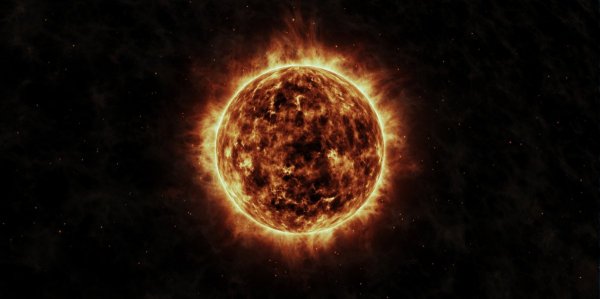
At the Large Hadron Collider (LHC) near Geneva, scientists have achieved temperatures that dwarf those at the core of the Sun. When gold particles are smashed together, the collision generates a fleeting burst of heat reaching 7.2 trillion degrees Fahrenheit—a figure that surpasses the temperature of a supernova explosion. This is currently the highest temperature ever produced and observed on Earth.
To understand what "hot" means on a cosmic scale, it helps to start with the basics. Heat is essentially the vibration of atoms and subatomic particles; the hotter they are, the faster they move. Conversely, as things cool, that motion slows. At absolute zero—0 Kelvin, or -273°C (-460°F)—all atomic movement ceases. This is the cold limit, a point beyond which it is impossible to go, akin to traveling south from the South Pole.
But what about the upper limit? Physicists have proposed several theoretical ceilings, each tied to different frameworks of understanding the universe.
Planck Temperature: The Absolute Ceiling
The most extreme candidate is the Planck Temperature, a staggering 100 million million million million million degrees, or 1032 Kelvin. This number is so vast that it defies comprehension—saying it is hot is like saying the universe takes up some space. According to current physics, this is the point at which the laws of physics as we know them break down. At this temperature, gravity becomes as strong as the other three fundamental forces (electromagnetism and the strong and weak nuclear forces), and they merge into a single unified force. Understanding this unification is often called the "theory of everything," a goal that remains elusive in modern theoretical physics.
Hagedorn Temperature: The Practical Limit
A more tangible limit, known as the Hagedorn temperature, is the point at which hadronic matter—the ordinary matter that makes up protons, neutrons, and other particles—becomes unstable and disintegrates. This occurs at approximately 2 x 10¹² Kelvin. Some theoretical physicists suggest that instead of simply evaporating, hadronic matter might transition into a state called quark matter, which could potentially be heated further. However, quark matter remains a theoretical concept, and its existence has not been confirmed.
String Theory's Alternative
String theorists offer a slightly different answer. In their framework, the most fundamental constituents of the universe are not particles but vibrating strings. These strings have their own Hagedorn temperature, which they calculate to be around 1030 Kelvin—a bit cooler than the Planck temperature. This difference arises because the behavior of strings under extreme heat differs from that of hadrons.
Unfortunately, testing these predictions is currently impossible. The energies required to reach such temperatures are far beyond our technological capabilities. As a result, the exact highest temperature in the universe remains unknown. But for now, physicists consider the Planck and Hagedorn temperatures, along with string theory's variant, as the leading contenders for the ultimate heat limit.












Comments
Sign in to leave a comment
No account? Create one
No comments yet.