
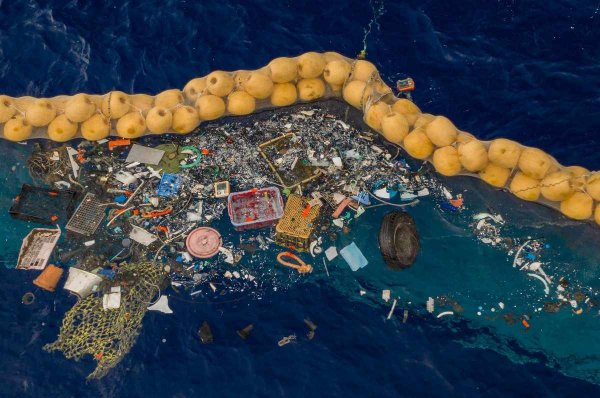
A 330-foot floating barrier towed through the Pacific Ocean has collected nearly 20,000 pounds of plastic waste, marking a significant test for a Dutch-led initiative targeting marine debris. The device, named “Jenny,” was developed by The Ocean Cleanup, a nonprofit founded by Boyan Slat, and deployed in the Great Pacific Garbage Patch in August. The final trial, conducted last week, successfully captured the plastic trash, according to Insider.
The system operates on a simple principle: two vessels tow the funnel-shaped net barrier at a slow 1.5 knots, while ocean currents push floating debris into the nets. Once full, the collected plastic is transported to shore, where it is recycled into products like $200 sunglasses. Proceeds from these sales help fund further cleanup operations.
Scale and Ambition
The Ocean Cleanup aims to remove 90 percent of floating ocean plastic by 2040. Slat estimates that ten such devices could clean up to half of the Great Pacific Garbage Patch within five years. The patch, located between Hawaii and California, is the largest accumulation zone of ocean plastic in the world.
While the recent haul demonstrates the technology’s capability, some experts question its overall effectiveness in addressing the broader problem of ocean pollution. A study published in Marine Conservation and Sustainability notes that the system only captures surface-level plastics, while there could be as much as 30 times more plastic on the ocean floor. Additionally, the vessels used to tow the device are powered by fossil fuels, raising concerns about the carbon footprint of the cleanup effort.
Despite these challenges, Slat remains optimistic about the potential of the system to contribute to long-term ocean health. The organization continues to refine the technology and expand its operations.









Comments
Sign in to leave a comment
No account? Create one
No comments yet.