
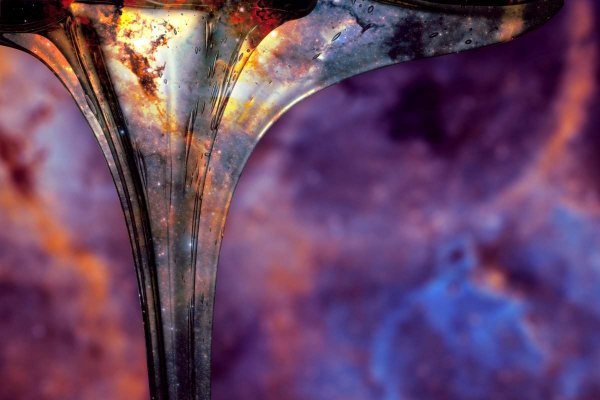
A physicist at the Indian Institute of Technology in Jodhpur has put forward a bold idea: outer space might not be the empty, unchanging void we imagine, but rather a viscous, stretchy fluid similar to slow-moving honey. The proposal, which has not yet undergone peer review, was flagged by Live Science and could offer a new way to reconcile puzzling observations from two major sky surveys.
Muhammad Ghulam Khuwajah Khan, the researcher behind the theory, suggests that treating space as a fluid with internal friction might explain why dark energy—long thought to be constant—appears to have weakened as the universe aged. If confirmed, the model would not replace the standard framework of cosmology but would add a subtle twist to it.
Why the Standard Model Needs a Second Look
For decades, astronomers have relied on the Lambda Cold Dark Matter (ΛCDM) model to describe the universe's evolution. This model incorporates the cosmological constant, denoted by the Greek letter Lambda (Λ), which represents the energy density of empty space and is assumed to be immutable. It successfully explains the Big Bang, the gravitational glue of dark matter, and the accelerating expansion driven by dark energy.
However, recent data from the Dark Energy Spectroscopic Instrument (DESI) survey in Arizona and the Dark Energy Survey in Chile have introduced a wrinkle. Telescopic measurements show discrepancies with the ΛCDM model's predictions, hinting that dark energy may not be constant after all. Instead, it appears to have weakened over time as the universe expanded and aged.
A Fluid Approach to Cosmic Expansion
Khan's theory attempts to bridge this gap. He proposes that space can be modeled as a viscous, elastic medium that contains what he calls “spatial phonons”—vibrations emitted by atoms that create waves of tension in the fabric of space. In this view, dark energy still drives the universe's expansion, but these phonons exert a subtle opposing force, making the expansion uneven.
This extra resistance, he argues, could account for the observed deviations from the ΛCDM model without discarding the idea of a cosmological constant. The theory preserves the core concept of dark energy as a steady push, while adding a new layer that explains why the universe's growth isn't perfectly uniform.
Khan's paper is not yet peer-reviewed, and the idea remains speculative. But it offers a fresh avenue for researchers grappling with the biggest questions in cosmology. More data from ongoing dark energy surveys will be needed to test whether this fluid-like model holds up or fades into obscurity.
For now, the notion of space as a viscous fluid—one that resists expansion like honey resists a spoon—provides a thought-provoking alternative to the prevailing view. Whether it becomes a cornerstone of physics or a footnote in its history, it underscores the fact that our understanding of the cosmos is far from complete.











Comments
Sign in to leave a comment
No account? Create one
No comments yet.