
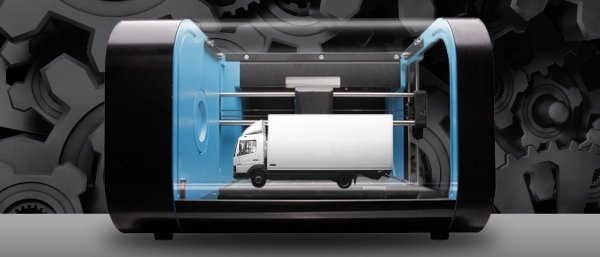
Daimler, the world's largest truck manufacturer, is adopting 3D printing to produce spare parts on demand, a shift that could significantly reduce the cost and complexity of its global logistics network. Instead of shipping physical components across the world, the company now plans to send digital blueprints to printers located closer to the point of use.
The move is not a wholesale replacement of traditional manufacturing. According to the company, 3D printing is currently limited to small batches of components and cannot be used for high-volume parts such as metal body panels. Still, the technology offers clear financial benefits: it cuts shipping expenses, reduces the need for large warehouses, and allows for small production runs that minimize excess inventory.
One notable advantage is the ability to produce obsolete parts in small quantities whenever they are needed, addressing a long-standing challenge for vehicle owners and service centers. The printing process used is selective laser sintering (SLS), which employs lasers to fuse powdered materials—such as plastic, glass, and metal—into solid objects.
Automakers Embrace Additive Manufacturing
Daimler is not alone in exploring 3D printing. Volkswagen and BMW have used the technology for years to rapidly create prototypes. Audi announced on Wednesday that it would establish a dedicated 3D printing center at its factory in Ingolstadt, Germany, to produce steel and aluminum components and tools.
Industry analysts point to falling costs as a key driver. According to projections, the cost of additive manufacturing is expected to drop by 25 to 45 percent by 2020. That decline, combined with continuous improvements in printer capabilities, is making the technology more attractive across multiple sectors.
Developers are also pushing the boundaries of what 3D printing can achieve. Recent innovations include printers capable of producing superconductive metals, porous artificial bones, living tissue structures, and other advanced materials. As these machines become more capable, the efficiency gains could help industries not only create better products but also reduce expenses, waste, and pollution associated with conventional manufacturing.
For Daimler, the transition to 3D printing is a practical response to the pressures of global supply chains. By producing parts closer to the customer, the company can respond faster to demand while trimming overhead. The approach also aligns with broader sustainability goals, as it reduces the carbon footprint associated with shipping and warehousing.
While the technology is not yet ready for all components, the move signals a growing acceptance of additive manufacturing as a mainstream tool in the automotive industry. As costs continue to fall and capabilities expand, more manufacturers are likely to follow suit, reshaping the way spare parts are sourced and delivered.












Comments
Sign in to leave a comment
No account? Create one
No comments yet.