
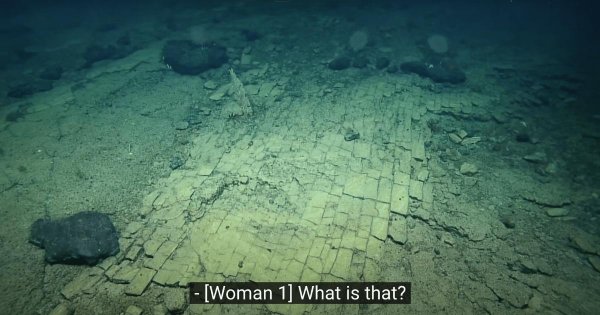
During a recent expedition to the Liliʻuokalani Ridge in the Pacific Ocean, researchers aboard the Exploration Vessel Nautilus captured footage of a rock formation that bears a striking resemblance to a cobblestone road. The video, posted on the vessel's official YouTube channel, shows a flat expanse of stone divided into geometric blocks, prompting one crew member to exclaim, "I feel like I'm looking at the road to Atlantis."
The formation, described by the team as a "dried lake bed," is actually a natural geological feature. According to a post on the Nautilus website, what appears to be a "yellow brick road" is the result of ancient volcanic activity. The fractured rock, likely from a lava flow that cooled and cracked into polygonal shapes, creates an optical illusion of human-made paving.
The Nautilus team, part of the Corps of Exploration, was conducting seafloor surveys when they encountered the site. The video also shows researchers collecting rock samples and observing nearby marine life, adding to the expedition's scientific value.
Beyond the Road: A Window into Ocean Biodiversity
This discovery follows a series of notable finds by the same team. Earlier this month, CNET reported that the researchers encountered an "unidentified gelatinous creature" during a submarine dive, which elicited an enthusiastic response from the crew. One team member was heard exclaiming, "Very charismatic. Yay!" as the animal drifted into view.
Such moments highlight the excitement of deep-sea exploration, but they also underscore the urgency of documenting marine ecosystems. With coral reefs bleaching, plastic pollution spreading, and scientists warning of a potential mass extinction, researchers acknowledge that time is limited. The Nautilus team, like other oceanographers, can only cover so much ground, leaving many species potentially undiscovered before they vanish.
The "yellow brick road" serves as a reminder of the ocean's vast unknowns and the importance of continued exploration. While it may not lead to Atlantis, it offers a tangible glimpse into the geological processes that shaped the seafloor.





Comments
Sign in to leave a comment
No account? Create one
No comments yet.