
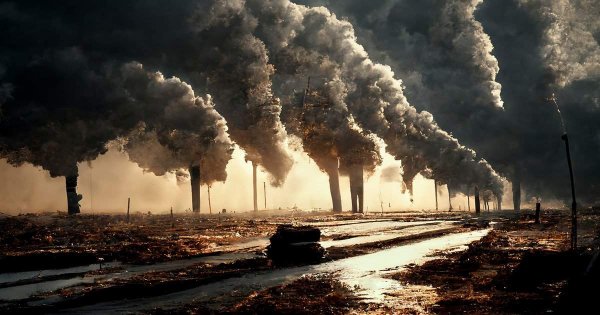
A new scientific simulation of a runaway greenhouse effect has produced a disturbing outlook for Earth's climate future. The model, developed by researchers, shows that a relatively small increase in greenhouse gas concentrations could trigger an irreversible chain reaction, leading to extreme warming and making the planet largely uninhabitable. The findings underscore the fragility of Earth's climate system and the critical importance of curbing emissions.
The simulation, detailed in a recent study, demonstrates how water vapor—a potent greenhouse gas—can amplify warming in a feedback loop. As temperatures rise, the atmosphere holds more moisture, which in turn traps more heat, further accelerating the warming process. This self-reinforcing cycle could eventually lead to a state where the oceans evaporate and the planet becomes a hothouse, similar to Venus.
While the concept of a runaway greenhouse effect has been discussed for decades, this new simulation provides a more detailed and sobering view of the threshold at which such a scenario could unfold. The researchers identified a critical level of solar radiation and greenhouse gas concentrations that, if exceeded, would push the climate system past a point of no return. The exact thresholds remain uncertain, but the simulation suggests they may be lower than previously thought.
Why This Matters for Earth's Climate
The implications of this research are profound for understanding climate tipping points. Unlike gradual warming, a runaway greenhouse effect represents a catastrophic and irreversible shift in planetary conditions. The study's authors emphasize that while such an extreme outcome is not imminent under current emission scenarios, the risk increases with every fraction of a degree of warming. This research adds to the growing body of evidence that the margin for error in climate policy is shrinking.
The simulation also highlights the importance of water vapor as a feedback mechanism, a factor often underrepresented in public discussions of climate change. The study's findings align with broader climate science that warns of cascading effects, such as the loss of ice sheets and the release of methane from permafrost, which could further accelerate warming.
Although the study does not provide a specific timeline for a runaway greenhouse event, it serves as a stark reminder of the stakes involved in international climate negotiations. The Paris Agreement's goal of limiting warming to well below 2 degrees Celsius above pre-industrial levels is seen as a critical safeguard against crossing such thresholds. However, current national commitments are insufficient to meet this target, according to the UN Environment Programme's annual Emissions Gap Report.
The research team behind the simulation calls for urgent and substantial reductions in greenhouse gas emissions to avoid the most severe outcomes. They stress that while the scenario is extreme, it is a plausible end-member of climate change that must be taken seriously in risk assessments.
As the world grapples with the impacts of climate change—from extreme weather events to sea-level rise—this study adds a new dimension to the urgency. It suggests that the window to act is narrow, and the consequences of inaction could be existential. The simulation is a scientific exercise, but its message is clear: the stakes are higher than ever.










Comments
Sign in to leave a comment
No account? Create one
No comments yet.