
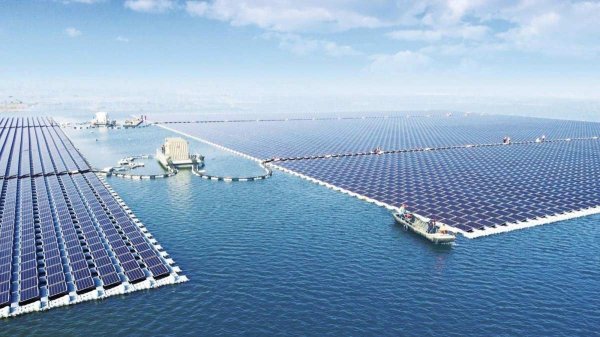
In Anhui province, a region historically tied to coal extraction, a new energy project now floats on the water-filled crater of a depleted mine. The facility, which began operations with 166,000 solar panels, delivers 40 megawatts of electricity—enough to meet the annual demand of roughly 15,000 households, according to a report by the South China Morning Post.
The installation is part of a broader surge in solar power across China. By November 2017, the country's photovoltaic capacity had reached 126 gigawatts, a 67 percent increase over the same period the previous year. That growth reflects a deliberate policy shift as Beijing seeks to curb the environmental toll of its heavy reliance on coal, oil, and natural gas—a reliance linked to an estimated 366,000 premature deaths in 2013 alone.
China's energy strategy is evolving, as noted in the International Energy Agency's annual review of global energy markets. The IEA describes a nation transitioning from carbon-intensive manufacturing toward a more diversified economic model. The floating solar farm, situated in a coal-rich region, exemplifies this pivot, pairing clean energy generation with the rehabilitation of land degraded by extractive industries.
Choosing water as a platform offers distinct advantages. Unlike ground-mounted arrays, floating panels do not displace terrestrial ecosystems, preserving local flora and fauna. Additionally, the cooling effect of water helps maintain panel efficiency, as photovoltaic cells lose performance when overheated.
Repurposing Industrial Ruins
The Anhui project is not an isolated experiment. Governments worldwide are exploring ways to give obsolete sites a second life. In Ukraine, for instance, a solar farm is being constructed within the exclusion zone of the Chernobyl nuclear disaster, turning a site of catastrophe into a source of clean power.
While such projects signal progress, China's path to a low-carbon future remains steep. With a population approaching 1.4 billion, the country's dependence on coal is deeply entrenched. Analysts suggest that a complete transition will require decades and a mix of technologies, including carbon capture and storage, to offset emissions that cannot yet be eliminated.
For now, the floating solar farm in Anhui stands as a tangible symbol of China's renewable ambitions—a reminder that even the most polluted landscapes can be transformed into engines of clean energy.









Comments
Sign in to leave a comment
No account? Create one
No comments yet.