
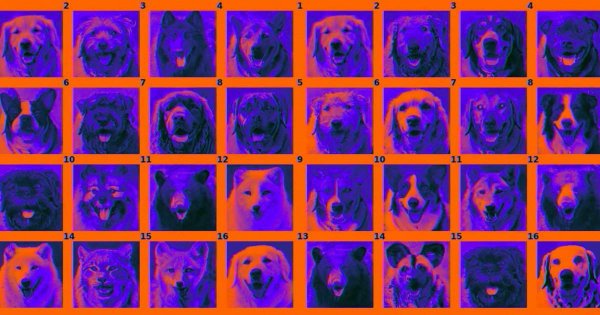
Nvidia has released a new algorithmic tool called PetSwap that can take a photograph of a person and morph their features into those of a dog, cat, or other animal species. The tool, which runs on a generative adversarial network (GAN), allows users to upload a selfie and see a transformed version of themselves as a fluffy pet.
The underlying algorithm, known as Few-shot UNsupervised Image-to-image Translation (FUNIT), was detailed in a project paper. GANs are a class of artificial intelligence commonly used to generate realistic images of people who don't exist, clone voices, and train autonomous vehicles to respond to simulated road conditions. PetSwap applies this same technology to a more playful purpose.
While the tool is designed for entertainment, its developers note that the ability to generalize from a small set of new information is a significant challenge for AI. Humans excel at recognizing patterns and applying prior knowledge to new situations, but AI systems often struggle with such tasks. The FUNIT algorithm aims to address this limitation, and tools like PetSwap could serve as a testbed for improving machine vision technologies.
Users curious about their canine or feline alter ego can try the tool by uploading a selfie. However, those with glasses may encounter unpredictable results, as the algorithm can produce varied and sometimes surprising transformations.
From Playful Tool to Practical Applications
Although PetSwap is a novelty, the underlying research has broader implications. If algorithms like FUNIT can successfully generalize from limited data, they could accelerate progress in fields that rely on machine vision, such as autonomous driving and image recognition. The project paper emphasizes that while humans are remarkably good at generalization, AI's ability to apply prior knowledge to new tasks is still far behind.
PetSwap is part of a growing trend of AI tools that blur the line between reality and simulation, raising questions about authenticity and the potential for misuse. However, in this case, the goal is purely creative, offering a lighthearted look at how AI can transform everyday images.



Comments
Sign in to leave a comment
No account? Create one
No comments yet.