
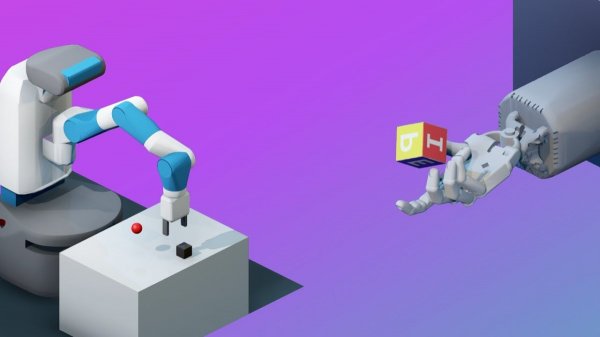
OpenAI has introduced a new open-source algorithm that allows artificial intelligence systems to learn from their failed attempts, a method that mirrors how humans adapt after setbacks. The algorithm, named Hindsight Experience Replay (HER), was released this week and is designed to help AI agents treat every unsuccessful effort as a stepping stone toward a different, unintended goal.
The core idea, as outlined in OpenAI's blog post, is that when an AI fails to achieve a specific objective, it has nonetheless accomplished something else. The researchers suggest that by pretending this alternate outcome was the original goal, the AI can extract a learning signal from what would otherwise be a dead end. This process, repeated over time, enables the agent to gradually learn how to achieve a range of goals, including the ones it actually set out to accomplish.
HER is built on the principles of reinforcement learning, a training method where AI agents receive rewards for correct actions. Traditional reward systems either give a binary signal—success or failure—or provide partial credit based on proximity to the goal. Both approaches have limitations. The first can stall learning because the AI receives no feedback on near-misses, while the second can be difficult to implement, according to IEEE Spectrum.
By reframing failures as alternate successes, HER provides a reward even when the original task is not completed. This allows the AI to learn faster and with higher quality, as it can derive useful information from every attempt. The algorithm was demonstrated using OpenAI's Fetch simulation, which shows a robotic arm learning to manipulate objects.
Learning from Mistakes Like a Human
The concept draws a parallel to human learning. For instance, when learning to ride a bicycle, initial failed attempts teach a person what not to do, and each mistake brings them closer to success. HER aims to give AI the same benefit, allowing it to learn from errors without the frustration that humans might feel.
However, the approach is not without challenges. Matthias Plappert, a researcher at OpenAI, told IEEE Spectrum that applying HER to real robots remains difficult because it still requires a significant number of samples. The algorithm's effectiveness has been shown in simulations, but translating that success to physical hardware is a work in progress.
The release of HER adds to OpenAI's broader efforts to improve AI learning capabilities, following their work on reinforcement learning methods like OpenAI Baselines. While HER is not a cure-all, it represents a step toward making AI more adaptable and efficient in learning from its own experiences.











Comments
Sign in to leave a comment
No account? Create one
No comments yet.