
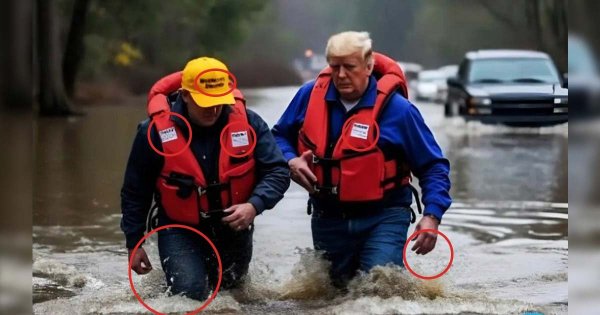
An AI-generated image depicting former President Donald Trump wading through floodwaters has circulated widely on social media, becoming the latest example of synthetic content spreading misinformation in the aftermath of Hurricane Helene. The image, which shows Trump in a lifejacket and blue jeans, was shared over 160,000 times on Facebook within two days, according to a fact-check by USA Today.
The photograph, which first appeared on Facebook last weekend, shows Trump marching through thigh-high water alongside another man in rescue gear. However, close inspection reveals multiple flaws: Trump's right hand is distorted, and the lettering on both men's clothing is illegible. These inconsistencies have led fact-checkers to confirm the image is AI-generated, not a genuine photograph.
Despite these clear signs, the image has been widely shared, often with captions suggesting that social media platforms are suppressing it for political reasons. One post claimed, "I don't think FB wants this picture on FB," implying censorship. However, the image remains live on Facebook, albeit with an "altered photo" warning and a link to a third-party fact-check.
The image has also spread to other platforms, where users have attached messages like "they don't want you to see this side of Trump" and urged leaders to "show me though [sic] your actions." These captions reflect a broader trend of political misinformation ahead of the presidential elections next month.
Wider Wave of Synthetic Content
The Trump image is not an isolated incident. In the wake of Hurricane Helene, which caused extensive damage across parts of Appalachia, numerous AI-generated images have surfaced online. These include depictions of flooded homes, abandoned dogs on roofs, and men barbecuing in knee-high water. A particularly viral image shows a crying young girl clutching a puppy in a canoe, which has been repeatedly shared by right-wing influencers and close Trump allies on X (formerly Twitter).
While some of these images may seem obviously fake to tech-savvy users, their widespread acceptance raises concerns about media literacy in the United States. The ease with which AI-generated content can be created and disseminated has outpaced the public's ability to critically evaluate what they see online.
Fact-checking organizations have stepped in to debunk these images, but the sheer volume of synthetic content poses a significant challenge. The Trump flood image, in particular, has been flagged by multiple publications, yet it continues to circulate, underscoring the difficulty of containing misinformation once it goes viral.
As the election approaches, the proliferation of AI-generated images is likely to intensify, making it increasingly important for social media users to verify the authenticity of what they share. The incident serves as a reminder that not everything seen online is real, and that even seemingly credible images can be fabricated.











Comments
Sign in to leave a comment
No account? Create one
No comments yet.