
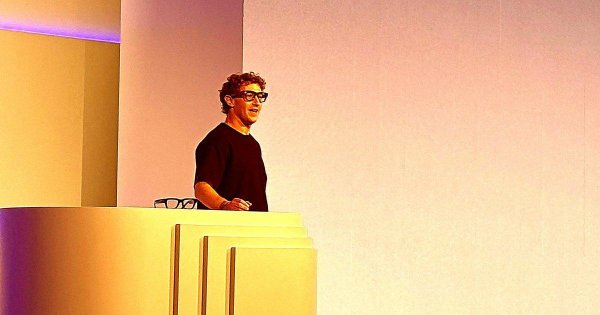
Meta's annual Connect conference on Wednesday turned into an unexpected showcase of the pitfalls of live technology demonstrations, as CEO Mark Zuckerberg's on-stage presentation of the company's new AI-enhanced smart glasses encountered a series of glitches. The keynote, held at Meta's headquarters, was intended to highlight the integration of artificial intelligence into its Ray-Ban smart glasses, but instead featured multiple technical failures that left the audience and viewers with a candid look at the challenges of AI deployment.
The most notable mishap occurred when Zuckerberg attempted to demonstrate a WhatsApp video call through the Meta Ray-Ban Display smart glasses. The device failed to accept the incoming call, prompting Zuckerberg to ad-lib, "This is, uh… it happens," and attempt the call again, acknowledging his own fumbling with the device. The moment, captured on live stream, quickly became a focal point of post-event discussions.
Another segment featured content creator and amateur chef Jack Mancuso, who was supposed to use the glasses' "Live AI" feature for assistance while preparing a steak sauce. However, the AI incorrectly assumed he had already combined the base ingredients, leaving Mancuso standing before an empty glass bowl and the audience with a clear example of an AI hallucination—a known issue where the system generates inaccurate responses based on incomplete context.
Explaining the Failures
In an Instagram ask-me-anything session following the keynote, Meta's Chief Technology Officer Andrew Bosworth addressed the incidents, describing them as a "demo fail, not a product fail." He explained that when Mancuso said "Hey Meta, start Live AI," the command inadvertently triggered the Live AI feature on every Ray-Ban Meta device in the building, not just the one being used. "That obviously didn't happen in rehearsal," Bosworth said, noting the difference in scale during the actual event.
Bosworth also revealed that the company had routed all traffic, including from the headsets used by attendees, to its "dev server," which led to a self-inflicted denial-of-service attack. "We DDoS'd ourselves, basically," he admitted, using the term for a cyberattack that overwhelms a network with excessive traffic. This internal overload likely contributed to the video call failure, which Bosworth attributed to a "never-before-seen bug" that prevented Zuckerberg from accepting calls.
Despite the CTO's reassurances, the incidents highlight broader concerns about the reliability of AI in consumer devices. While software bugs are an inevitable part of technology development, the potential for AI hallucinations—where the system provides incorrect or misleading information—poses a significant challenge for users. The prospect of an AI assistant giving wrong instructions through smart glasses, as seen in the cooking demo, underscores the need for robust error handling and user safeguards.
The pricing for the new glasses was announced as $379 for the standard Ray-Ban Meta model and $799 for the version with a small display. Whether consumers will find the AI features worth the cost remains an open question, especially given the mixed signals from the keynote.
Interestingly, some journalists who had hands-on time with the glasses after the event reported a surprisingly positive experience, suggesting that the on-stage failures may have been an anomaly rather than a reflection of the product's everyday performance. As Meta continues to refine its AI technology, the company will likely face scrutiny from both users and industry observers eager to see if the product can live up to its promise without the glitches that marred its debut.












Comments
Sign in to leave a comment
No account? Create one
No comments yet.