
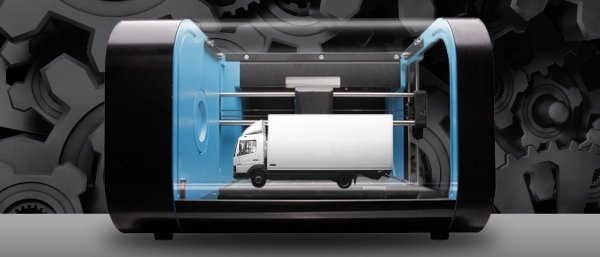
Daimler, the world's largest truck manufacturer, will begin 3D printing its spare parts instead of shipping them globally, a move that cuts shipping expenses and storage costs. The company will send blueprints of parts to a printer, producing components on demand.
The selective laser sintering (SLS) process uses lasers to melt powders into materials such as plastic, glass, and metal. However, the technology is currently limited to small batches of components and cannot produce high-vehicle components like metal body panels. Despite this limitation, Daimler expects significant savings from reduced logistics, storage, and excess production, and the ability to produce obsolete parts in small volumes as needed.
Daimler is not alone in adopting 3D printing. Volkswagen and BMW have used the technology for prototypes for years. On Wednesday, Audi announced it will establish a 3D center at its factory in Ingolstadt, Germany, to generate steel and aluminum components and tools. The additive manufacturing sector is expected to see a 25-45% drop in costs by 2020, according to the source. Developers are also advancing 3D printing capabilities, with innovations including printers that produce superconductive metals, porous artificial bones, and living tissue structures.












Editorial Notes