
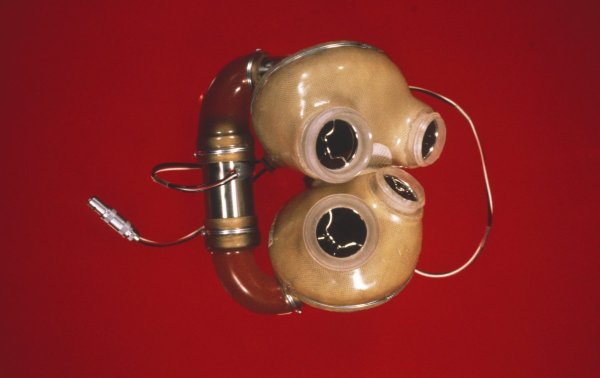
A small implant called transcatheter aortic valve implantation (TAVI) is advancing the treatment of aortic stenosis, a condition in which the aortic valve narrows. One version of the device is made from bovine pericardium—a tough membrane surrounding a cow's heart—encased in a collapsible metal stent. It is guided into position via a previously inserted guide-wire and then inflated like a miniature expanding doughnut to clear impaired aortas.
In most countries, open-heart surgery remains the most common procedure for aortic stenosis. However, TAVI costs approximately £20,000 (around $25,000), so it is typically reserved for patients with severe complications that make surgery impossible. The procedure has also been performed on unborn babies. In 2005, Dr. Wayne Tworetzky, director of fetal cardiology at Boston Children's Hospital, implanted TAVI in the unborn baby girl of Angela and Jay VanDerwerken at Brigham and Women's Hospital. The fetus had hypoplastic left heart syndrome (HLHS), a condition in which the left side of the heart develops improperly, requiring doctors to create and retain a hole between the left and right ventricles to oxygenate blood sufficiently. This improvement could reduce rates of miscarriage and infant deaths.
Many believe the future of heart treatment lies in artificial hearts, which scientists are pursuing in three main ways. First, a robotic heart could be created with tiny rotary motors suspended magnetically to reduce friction damage. Companies including Carmat, working with heart surgeon Alain Carpentier, are developing such devices, but no models have been tested in animals yet.
Second, researchers are exploring decellularized hearts. This involves isolating the extracellular matrix by removing cells from a donor heart, modifying it to human specifications, and encouraging human heart cells to grow around the remaining skeleton. In a 2008 experiment overseen by Doris Taylor, now director of the Center for Cell and Organ Biotechnology at the Texas Heart Institute, scientists generated electrical activity but no contraction or pumping motions.
Third, 3D printing could produce artificial hearts. This process is similar to decellularization but uses a heart printed with amenable materials.
TAVI is improving survival rates for heart complications and making surgery easier to overcome. Thomas Morris reported in The Guardian that "just minutes after being given a new heart valve, the patient raised an arm from under the drapes and shook the cardiologist's hand warmly." However, high costs and a shortage of donors—the waiting list has doubled in the last five years in the U.K. alone—remain obstacles. Artificial hearts could eliminate the donor shortage, saving countless lives.
Despite these developments, the most cost-effective and life-saving approach to heart disease is early detection. Advances in preventive treatments include a silicon sleeve that can help the heart beat and an artificial intelligence system that can predict heart attacks.











Editorial Notes