
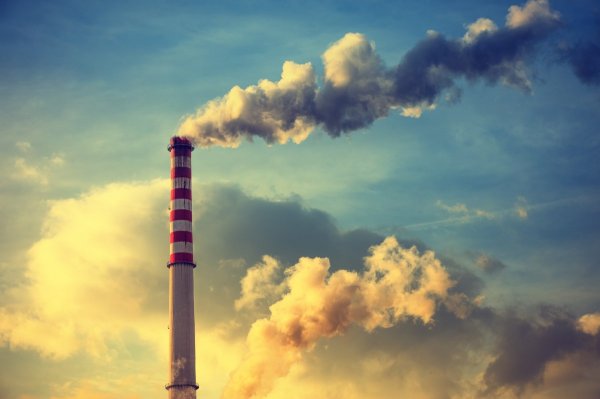
MIT researchers have developed a membrane-based system that converts carbon dioxide from power plant emissions into carbon monoxide, a gas that can be used as fuel or as a feedstock for chemicals. The membrane, made from a compound of lanthanum, calcium, and iron oxide, is reported to be 100 percent selective for oxygen.
MIT postdoc Xiao-Yu Wu developed the system with Ahmed Ghoniem, the Ronald C. Crane professor of mechanical engineering. The separation process relies on extremely high temperatures, reaching 990 degrees Celsius. Oxygen from carbon dioxide passes through the membrane while carbon monoxide remains on the other side.
For the process to work, oxygen must continue flowing through the membrane until it reaches the other side. A vacuum could accomplish this, but it would require significant energy. Instead, the researchers propose using a stream of fuel such as hydrogen or methane, which are easily oxidized and do not require a pressure difference to ferry oxygen atoms through the membrane.
The resulting carbon monoxide can be used directly as fuel or combined with hydrogen, water, or both to produce liquid hydrocarbon fuels. It can also be used to create chemicals including methanol and syngas.
Heat Sources and Energy Storage
The heat required for the process could come from solar energy or waste heat, potentially including waste heat from the power plant itself. In effect, the technique stores that energy in chemical fuel form.
The approach resembles carbon capture projects pursued by various groups worldwide. The researchers suggest that natural gas power plants could use the system to split incoming gas into two streams: one burned to generate electricity and carbon dioxide, and another that works with the membrane to produce the oxygen-reacting fuel source. Such an implementation would allow the plant to yield syngas—a mixture of carbon monoxide and hydrogen—as a secondary revenue stream.
Next Steps for the Research
The next step will be investigating the best way to increase the rate of oxygen flow across the membrane. Attempts are also being made to integrate the membrane into working reactors and to pair those reactors with the fuel production mechanism.










Editorial Notes