
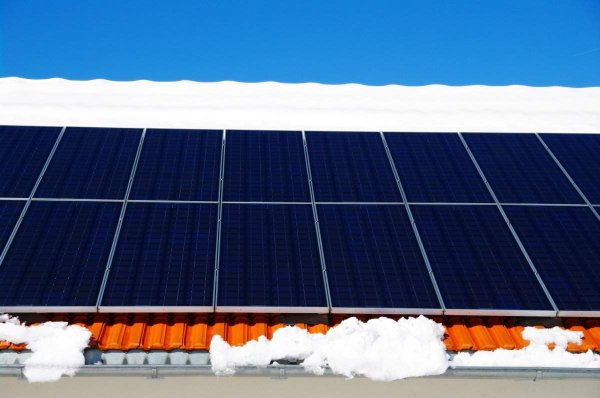
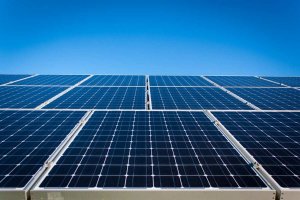
KUujjuaq, Nunavik — A solar pilot project in Kuujjuaq, the largest Inuit community in Nunavik, saved more than 400 liters (105.67 gallons) of diesel between September and October, generating an equivalent 1,100 kWh of electricity from solar panels, according to Andy Moorhouse of Makivik Corporation, the organization representing Inuit in Nunavik that manages the project.
The $560,000 pilot is designed not only to generate energy but also to collect data and knowledge for future planning. “Our pilot involves studying solar technology for a full 12 months period,” Moorhouse told Futurism. “By the end of September 2018, we’ll be able to have full data on how these technologies did throughout the year, especially during dark times such as now. It’s a learning scope for us, we want to see how well the technology handles our harshest climate, and try to understand if anything better could be designed specifically for the Arctic climate.”
Victoria Herrmann, director of the Washington-based Arctic Institute, told Futurism that investing in renewable and hybrid energy systems in the Arctic is economically sound. She noted that on average, Arctic residents pay twice as much as their southern counterparts for heating, electricity, and transportation fuel. “For those living in the Arctic, petroleum fuel isn’t about global commodity markets: it’s about survival. Solar, wind, and other renewable energy sources are not just possible there, they’re profitable,” Herrmann said.
While Canadian investors and governments are still exploring clean energy, Herrmann pointed to success stories in Alaska that have proven renewables to be economically viable and a boost for remote communities’ energy sovereignty and economic vitality. She said projects like the Kuujjuaq pilot and a large-scale installation planned for Old Crow demonstrate that renewables can work for many of the over 170 remote Indigenous communities in Canada that rely on expensive and dirty diesel.
This year, Canada allocated $400 million of its federal budget to establish an 11-year Arctic Energy Fund. Herrmann said this “can do for the Canadian North what the Alaska Renewable Energy Fund has done for their neighbor.”
For now, the people of Kuujjuaq are waiting to see how the project may improve their lives in the long term. Moorhouse said future plans will depend “on the results of this tests, and also we need to understand each community’s needs, including consumption patterns at different times of the year.” If the solar experiment proves viable, as early results suggest, the infrastructure could be scaled up to power schools or clinics, and eventually entire villages.








Editorial Notes