
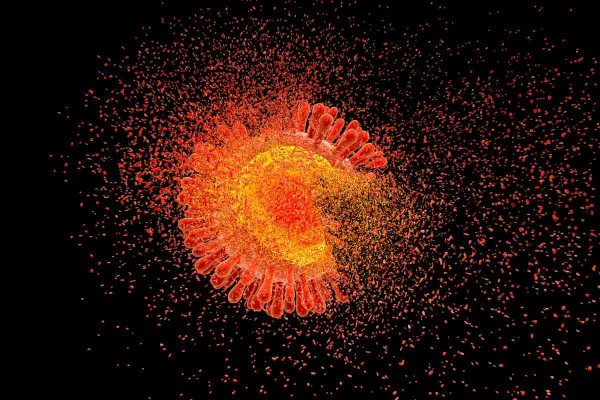
Researchers at the University of Alabama at Birmingham have solved the structure of the cytoplasmic tail of the gp41 protein — the last unknown protein structure of HIV-1, the retrovirus that can cause AIDS. The work completes the virus's structural map, a step the team says could inform how scientists approach treatment.
The cytoplasmic tail is not a peripheral detail. According to the research team, it plays a key role in the assembly of new viruses. "If we are able to inhibit incorporation of the envelope protein, we inhibit viral replication," said Jamil Saad, Ph.D., the team's lead. "This would disarm the virus and prevent disease. The cytoplasmic tail is a critical component of infectivity."
Saad described the project as unusually difficult. "It was the most challenging project I have encountered in the past 20 years," he said. "Many times I was about to quit, but I have a very persistent lab group."
What the Discovery Adds
With the complete structure known, researchers can study more precisely how HIV-1 infects human cells and how it propagates once inside them. The same structural features may also appear in related viruses, though the source material does not specify which ones.
The scale of the disease remains large. The Centers for Disease Control and Prevention estimates that about 1.1 million people over age 13 are living with HIV in the United States. The World Health Organization puts the global figure at 36.7 million people living with HIV/AIDS.
Much more research is needed before this structural knowledge can be turned into treatments, and the source does not describe a timeline or candidate drug. Even so, completing the structural picture gives scientists a defined target to work against.











Editorial Notes