
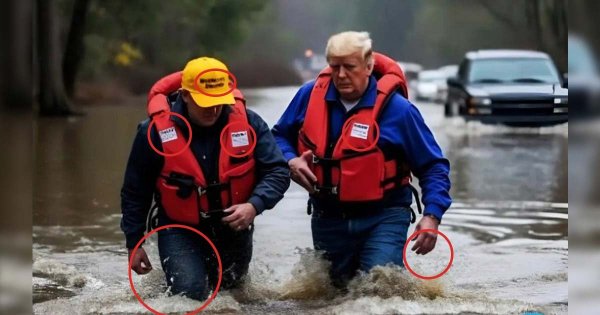
An AI-generated image depicting former President Donald Trump wading through thigh-high floodwaters in a lifejacket and blue jeans spread widely on Facebook and other social media platforms this week, according to multiple publications that confirmed the image is fake. The post, which first gained traction on Facebook last weekend, had garnered over ten thousand likes as of the original article's publication and was shared roughly 160,000 times in two days, according to a USA Today fact check.
The image does not withstand scrutiny. Trump's right hand is distorted, and the lettering on both men's clothing is illegible — common hallmarks of AI-generated images. While Trump has visited areas impacted by Hurricane Helene, there are no credible reports of him physically entering floodwaters in blue jeans.
The poster wrote in a caption, "I don't think FB wants this picture on FB," implying the platform was removing the post for political reasons. "They have been deleting it." The image remained live on Facebook but was flagged with an "altered photo" warning and a link to an independent third-party fact check.
The fake image spread to other platforms, where users captioned it with messages like "they don't want you to see this side of Trump" and calls for leaders to "show me through your actions."
Wave of AI Disaster Fakes
The Trump image is one of many AI-generated photos circulating after Hurricane Helene, which caused extensive damage throughout parts of Appalachia. Other synthetic images depicted flooded homes, abandoned dogs on roofs, and men in knee-high water barbecuing.
A widely shared AI image showing a crying young girl clutching a puppy while evacuating in a canoe circulated on X, formerly Twitter, where it was repeatedly shared by right-wing influencers and close Trump allies.
The apparent believability of these images points to broader concerns about media literacy in the U.S. ahead of the presidential election next month. The fact that many users are taking clearly AI-generated images at face value suggests significant gaps in public ability to identify synthetic content.










Editorial Notes